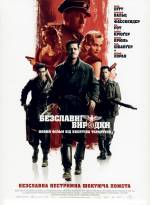
Inglourious Basterds
Inglourious Basterds
The film tells about the events of the Second World War on the territory of occupied France. A group of Jewish fugitive soldiers is hired by the French Resistance to sneak behind enemy lines and carry out sabotage activities there. In order to survive, they are capable of anything, since the laws of peacetime do not apply in war... Read more INGLORIOUS OBLUDKY Synopsis During the Nazi occupation of France, Shosanna Dreyfuss (Melanie Loren) becomes a witness of how the German colonel Hans Landa (Christoph Waltz) destroyed her entire family. Shosanna flees to France, where she becomes the owner and cinematographer of a cinema. Meanwhile, in Europe, Lieutenant Aldo Raine (Brad Pitt) organizes a group of Jewish-American soldiers who carry out terrible, shocking acts of revenge. Later, this group, known as "bastards", is joined by a German actress and undercover agent Brigitte von Hammersmark (Diane Kruger) to overthrow the leaders of the Third Reich. Fate brings everyone together to a movie theater, where Shosanna hatches her merciless plan of revenge against the Nazis... In INGLORIOUS BLOODS, Quentin Tarantino tells his shocking story about the Second World War. * * * BESSLAVNYE BLYUDKY About filming CHAPTER ONE – The script The long maturation of the script for INGLORIOUS BLADES can best be conveyed through numerous anecdotes that Quentin Tarantino often tells his friends and colleagues. Fragments of the script and plot emerge directly from these friendly conversations. Tarantino's film got its name from Enzo Castellara's spy thriller Inglourious Basterds, released in 1978. Castellari, who plays a small role in the film, explains: "These are completely different films, Quentin has his own story, unlike anything else. It's something that I inspired him to do." Producer Lawrence Bender recalls the first time he heard excerpts from the script for INGLORIOUS BLOOD: "It was more than ten years ago when Quentin read some scenes from the future movie in my office that just blew my mind. I thought, we have to dream this." But Bender had to wait a long time. The script underwent a lot of changes, lines both appeared and disappeared in it, but the name remained the same. Then Tarantino had the idea to turn the script into a television series or simply a novel. However, the result was a full-length film, which we will soon see on the screens of cinemas. Eli Roth, who plays the "bastard" Donna Donovitz, recalls: "My first acquaintance with INGLORIOUS BASTARDS was in December 2004, when Quentin was reading Hitler's monologue. I saw for the first time what I now call 'Quentin Tarantino Theater,' where he independently reads his script and plays the roles of all the actors." Roth continues: "I remember saying at the time that he was incredibly shocked by what he heard. For years, he'd call me and say, 'Hey, I have a new scene for INGLORIOUS BREADS,' but after a while he scrapped it. About a year and a half ago, he called me again and said, 'I really think I want to finish INGLORIOUS BREADS.'" On July 2, 2008, Taratino completed work on the script for THE INGLORIOUS FOOLS. Associate producer Pilar Savon recalls the first time she saw the script: "We call it 'publishing day.' He put the script on my desk and we made copies. He called his friends and said, 'I already have the script. I've done it. Come get it.' like, 'We couldn't do with a little wine.'" Tarantino says: "Each chapter of the film has a unique personality, different feelings and different languages. At first you think you are watching some low-budget Italian western, but with the iconography of the Second World War." Tarantino is known for the fact that he makes films for a wide audience, and not exclusively for Americans. Julie Dreyfuss, who played the role of Sophie Fatal in the film KILL BILL, comments: "When he worked on the film KILL BILL, he also wanted to be as authentic as possible." Impressed by the script, Bender and Tarantino met on Sunday, July 6, 2008 to discuss the project and set the tone. Bender recalls: "We talked about the script, and then we moved on to talking about where we were going to shoot it. We discussed different places around the world and, as a result, we focused on Germany, and especially on Berlin." Tarantino told Bender that he wanted the film to be finished by the Cannes Film Festival in 2009, which in itself is almost impossible. Executive producer Lloyd Phillips recalls: “The first 2-4 weeks were just crazy, everything happened incredibly fast. I worked 24 hours a day, dealing with time zones, the team, financial issues... Without such a well-coordinated team, which we had and worked like a Swiss watch, we would not have made it on time." Tarantino and the producers sent the script to Brad Pitt and began to collect the "bastards". By the time Tarantino arrived in Germany, production designer David Wasko had already scouted out all the possible filming locations and invited him to A room completely covered with photographs of different locations. 14 weeks after the "publication day" The cast was needed by the casting directors in Paris, Berlin and Los Angeles Pitt was the first in the cast to play Lt. Aldo Raine, and Tarantino flew to France during pre-production to meet him. We have long wanted to work together and this is a very suitable occasion. I didn't think of anyone else for this role." Diane Kruger, who was born in Germany and lives in Paris, found the idea of a multinational cast innovative. "Being European, I really appreciate it. It's great that Quentin decided to do it. This gives credibility. Different languages have different melodies, it's very funny to watch how people speak and don't understand each other." Kruger tells about her character: "Brigita von Hammersmack is a famous German film actress of the 1940s, whose fame can be compared to Marlene Dietrich or Hildegart Knef. She decided to stay during the war, for which the Germans respected her very much. She's known as the Nazi regime, but she's actually a British spy." Daniel Brühl was one of the first to be cast in INGLORIOUS BADGES. Brühl talks about his character Frederik Zoller, who became a hero for the Germans during the war: "He's quite nice and likable, he's a big movie fan. He has to win Shosanna and tries to do it throughout the film. He doesn't like that this girl treats him so badly.” Tarantino says that Bruhl's character “is based on the image of Oda Murphy [World War II veteran]. Like Oda Murphy, Daniel Bruhl should become a movie star.” Bruhl went to Paris to audition with French actresses who were auditioning for the role of Shosanna. A good relationship was established between him and Melanie Lauren and they "sounded" amazingly together. Melanie Lauren is an actress and director who received the Palme d'Or for the best short film in 2007 as the most promising young actress. "Shosanna has always been the main character - says Tarantino. - Both before the changes in my script and after. I made her a bad girl. Therefore, later I began to give her a more fragile and feminine image." Tarantino was still worried about the choice of an actor for the role of Colonel Hans Landa. Christoph Waltz conquered Tarantino immediately. "We started the audition, Quentin read along with him," recalls Bender. "As soon as Christophe started reading, Quentin and I looked at each other and saw in each other's eyes that we had found our Landa. Later we found out and were delighted that Christophe could speak English, German and French. He blew us away." The rest of the bastards were found very quickly. Til Schweiger, who plays Hugo Stieglitz, is a longtime admirer of Tarantino. He even named his first production company Mr. Brown Entertainment after watching Tarantino's film MAD DOGS. Eli Roth, who plays Donovitz, a deadly "bastard", is joined by Omar Doom and Michael Bacall. "I looked like a 'bastard' in DEATH PROOF," jokes Doom. German actor Gedeon Buckhardt, who plays Wilhelm Vyka, has been waiting for the opportunity to star in INGLORIOUS BULLIES for many years, eight to be exact. "We met about nine years ago in Vienna," recalls Buckhard about meeting Tarantino. "Then I saw him in Los Angeles and he told me that he was writing a script for a film about the Second World War, and that he thought of me as an actor for the role of a guy who can speak several languages and can be a translator. Since then I haven't heard from him. And suddenly I find out that Quentin is in Germany and is casting, so I almost didn't leave." from the phone, I was waiting to see if they would invite me to audition. Finally, they called me, I went to auditions, got the role, and since then the smile hasn't left my face." BJ Novak, who produces, writes and stars in NBC's THE OFFICE, took a hiatus from the TV show to play Smithson Utyvych in INGLORIOUS BADGES. Novak says: "My colleagues knew that this was not just a job, it was a dream, so they understood my absence." Comedian, writer and actor Paul Rust and Sam Levinn complete the team of "Ublyudkov". Tarantino was not particularly zealous, convincing the actors that it was cool to be "bastards". He told them: "The bastards act like Apaches even in the most hopeless situation. They are trying to win a psychological, guerilla war against the Nazis." As soon as the cast of "bastards" was completed, they began to choose actors for the roles of the French. "Denis Menochet was the first person we tried for the role of Pierre Lapada," says Bender. "He's a very strong actor, and although he doesn't have many lines, his eyes speak for him. His scene with Christoph Waltz is amazingly strong." The role of another Frenchman, Marcel, went to Jacky Ido. "Marcel is a character who is looking for purity in this world, mired in lies and cruelty," says Ido and talks about Shosanna. - Together they are trying to revive this purity." Irish actor Michael Fassenbender plays the role of British film expert Archie Hickox. This character speaks two languages, so Michael had to recall his knowledge of German: "My father was German. We left Germany when I was two years old, but we visited there many times. Therefore, I only needed to awaken German in my memory." In one of the central scenes with Fassenbender, Mike Myers and Rod Taylor play. "He (Myers) is fascinated by the period of the Second World War and he really wanted to be in the film, - says Steinberg about Myers. - When I saw him already on the set, I had no idea who was in front of me - the haircut and make-up changed him so much." Sylvester Groth had already played Goebbels before in Dana Levy's film "My Führer". "It is very difficult to play this character, because he changes all the time, and you can never completely capture him. It's impossible - and it's great. It's a good experience for an actor." German actor August Diehl plays Major Helstorm. "I think Helstorm really wants to be like Landa." Julie Dreyfus plays Francesca Modina. "Quentin wrote this role for her, - says Savon. - From the very first day she was Francesca. She's young, because she worked really hard and worked hard." When the casting was complete, Quentin gathered everyone together for a big table read. HEAD THIRD - the preparation team With very little time to prepare for the shoot, costume designer Anna Sheppard, production designer David Wasko and makeup artist Greg Nicotero spent several weeks in a frenetic working rhythm. Sheppard's costumes added another dimension to the film. Anna didn't have a shadow of doubt about the INGLORIOUS BLUDKS, because she is a pro at costumes of the Second World War era. Sheppard worked as a costume designer for Polanski's THE ORIGIN BROTHERS, THE PIANIST, and Spielberg's SCHINDLER'S LIST. "I felt that I was given freedom and, thanks to this, I used some new ideas and unexpected approaches, - says Sheppard. - I got tremendous pleasure from working on the film." Kruger really likes her costume, which she wears in the scene in "Louisiana": "Brigita doesn't want to be recognized, to be noticed, but she is still a movie star, so she wears a hat with feathers and a beautifully tailored suit. It's funny that someone can think that it is possible to remain unnoticed in such a beautiful suit." It took a lot of effort by Greg Nicotero and his team to make up Winston Churchill, Adolf Hitler and Joseph Goebbels. "Martin Wuttke, who plays Adolf Hitler, had only played him on stage before, so he never had to go through the process of prosthetics," says Nicotero. "We used silicone cheeks, a chin, a nose, a wig and contact lenses as a make-up test. It was fun to watch his transformation." Production designer David Vasko, who flew to Berlin to decide on the location of the film, very quickly gathered his team. He says: "Berlin is a very big and noisy city for shooting a film. As a result, the entire art team consisted of Berliners. I think this is the first film of this scale when a local team is involved in the work." Vasco says that the Loren cinema is, in fact, two cinemas in California. Tarantino asked Vasco to see several cinemas, including Vista Cinema in Silverlake. We were also lucky enough to find two vintage carbon-electrode projectors in working condition. Both the actors and the behind-the-scenes team watched with a sinking heart how these projectors work and how they show a movie - it was the first time for everyone. To learn how to work with projectors, Tarantino asked Lauren to go to the New Beverly Cinema. She recalls: "The test consisted in the fact that I had to demonstrate CRAZY PSOV. We showed a lot of trailers before the film. The audience did not know that I was controlling the projector. It was amazing. I worked for about three hours. I was completely alone with these machines and I want to be proud to say that I did it." CHAPTER FOUR - location After a decade of writing the script and 14 weeks of pre-production, filming of INGLORIOUS FREAKS began on October 9, 2008 in the small German town of Bad Schandau, near the Czech border. The scenes of the film were filmed practically in chronological order. The interior of the Lapada farm, the interior of the cinema and "La Louisiane" were filmed in the pavilion of the Berlin film studio Babelsberg, where such masterpieces as Polanski's PIANIST, THE DEVOTED GARDENER, BORN'S EXCELLENCE, THE COUNTERS, and later THE READER were released. After filming the Lapada farm, the production moved to Berlin. "When I arrived in Berlin, the first thing I did was check all the places of combat. You know, some buildings still have bullet holes. The remains of the war can be found in many places. Some of the places where we filmed were actually Nazi fortresses built by Hitler," Dum says. We see how the "Bastards" deal with the fascists in the forest. This forest area is part of Fort Haneberg, which was built in 1888 but was never used. It was closed after World War II and reopened only in 1990. Lauren, Bruhl and the team went to Paris for a few days to film a small scene in a French bistro, and then the production took a few days off. "I was happy to be a part of the only scene shot in Paris," says Bruhl. "You can't call it a production, because we shot a real place. It's the most beautiful city I've ever seen." CHAPTER FIVE - filming "We filmed in unusual places and received an amazing charge of energy from this - says Bender. - We worked where Goebbels filmed his films." The turning point in the film is the scene in "La Louisiane". The actors occupied a small space for three weeks after two and a half weeks of rehearsals. Everyone knew that this scene would be remembered. Tarantino says that this is reminiscent of a shortened version of INSANE PSOV with Germans and Nazis, but instead of a warehouse, the action takes place in a small, cramped bar. "By the time we had to shoot this scene, I already felt myself in it," Kruger shares her memories. "I knew all my lines. I dreamed about my lines. If I was woken up, I would say them all with the necessary intonation. There is one thing that makes Tarantino a genius director: even if you are somewhere in the background, he is always watching you. He notices everything." BJ Novak recalls: "For me, the coolest scene in the film is when Brad Pitt and I were kidnapped, handcuffed, with bags on our heads and put in a truck. All I had to do was sit, handcuffed and with a bag on my head. Brad Pitt was next to me in a white tuxedo, and Quentin Tarantino, my idol, was behind the camera - and here I realized that I shouldn't screw up. In There's a bag on my head, and there's not a single line. It's an outstanding scene. It's Brad Pitt in his white tuxedo, and it takes you back to the 40s." The final scene required extreme attention from the stunt coordinators Jeff Deschpaw and Bud Davis, who worked with more than 160 people from all over Europe. The burning scene was filmed at a cement factory, which the filmmakers literally burned to the ground. In this scene, more than a hundred people, crowding, stepping on each other, tried to leave the burning building in a panic. Jeff Dashnau says: "I want to say that I'm not afraid of fire, but fire in our business represents a fairly serious danger, because when you work with fire, there are no small accidents. If something happens, the scale is always huge." A film within a film... The surprise will be a short propaganda film called "Pride of the Nation". The film was directed by Eli Roth and his brother Gabriel with Daniel Bruhl in the lead role. There are about 120 shots in the film and the timing is about 7 minutes in total, which, however, are not fully shown in the film. Bruhl says: "I think this movie will be a bonus on DVD. It's definitely worth watching." Roth laughs: "A Jewish director films Nazi propaganda." EPILOGUE "Once upon a time in Nazi-occupied France...". "It's definitely not a documentary," says Diane Kruger. "It's about a group of rebels who decide to get together to take revenge on an invader. I like it." Roth adds adrenaline: "This is Quentin Tarantino's movie, pumped up with steroids and equipped with accelerators. There is speed, sudden change of action, tension, violence - everything that you usually expect from Tarantino, but with a sense that you have not seen before." Favorite aspect of a Quentin Tarantino film? Of course: "I like the fact that it is the power of cinema that defeats the Nazis," he says. "And not only as a metaphor, but also in the literal sense."
Open trailer
Director board
Browse production feed

Production feed
Browse production feed








Genres
-
 Drama (3795)
-
 Comedy (2460)
-
 Thriller (1618)
-
 Action (1236)
-
 Series (1088)
-
 Adventure (1019)
-
 Horror (818)
-
-
 Sci-Fi (808)
-
 Family (667)
-
 Animation (613)
-
 Mystery (536)
-
 Fantasy (532)
-
 Melodrama (520)
-
 Documentary (443)
-
-
 Biopic (355)
-
 Historical (219)
-
 Music (184)
-
 War (144)
-
 Short (112)
-
 Musical (106)
-
 Festival (97)
-
-
 Biography (85)
-
 History (72)
-
 Western (70)
-
 Mystic (46)
-
 Erotic (44)
-
 Stage Play (35)
-
 Military (33)
-
-
 Noir (16)
-
 Concert (15)
-
 Kids (12)
-
 Comic Book (11)
Release years
-
 2026 (375)
-
 2025 (330)
-
 2024 (355)
-
 2023 (428)
-
 2022 (484)
-
 2021 (487)
-
 2020 (582)
-
-
 2018 (761)
-
 2017 (789)
-
 2016 (717)
-
 2015 (524)
-
 2014 (415)
-
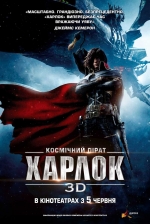 2013 (189)
-
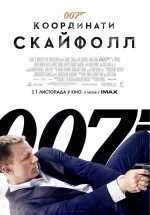 2012 (77)
-
-
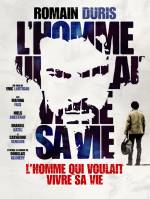 2010 (63)
-
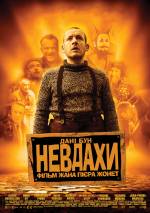 2009 (75)
-
 2008 (68)
-
 2007 (64)
-
 2006 (47)
-
 2005 (57)
-
 2004 (48)
-
-
 2002 (42)
-
 2001 (43)
-
 2000 (44)
-
 1999 (34)
-
 1998 (22)
-
 1997 (26)
-
 1996 (20)
-
-
 1994 (20)
-
 1993 (15)
-
 1992 (17)
-
 1991 (15)
-
 1990 (21)
-
 1989 (14)
-
 1988 (20)
-
-
 1985 (14)
-
 1982 (12)
-
 1979 (11)
-
 1966 (10)
-
 1957 (11)