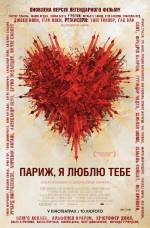
Paris, je t'aime
Paris, je t'aime
The unique atmosphere of Paris, twenty directors from different countries of the world and five minutes to tell a love story. Each story takes place in a certain district of Paris. Eighteen novels are united by one word - love. Love in its broadest sense – to something mysterious, to a city, to a child, to a man or a woman. A wide variety of actors have gathered here - from celebrities to completely unknown people. And completely different genres were mixed: drama, comedy, horror, parody. "...I was both happy and sad at once... I felt alive... at that moment I fell in love with Paris, and at that moment I felt that Paris loves me too," said the heroine of one of the films, and she was right. Cities, like everything else, have the property of reciprocating. And Paris. Give your heart to the capital of France and you will receive a whole ocean of romance in return. Read more Generation of love In five minutes to tell and show a love story against the background of one of the Parisian neighborhoods - that's what the task was set before twenty directors from different countries of the world. This is how the film "Paris, I love you" (Paris je t'aime) turned out. Paris has been inspiring filmmakers from different countries for many years, but our film is by no means about the past. The goal of all participants in this project was to show the Paris of today, to try to move away from the usual image of the city on a postcard and to film something that has not yet been seen on the big screen. The title of the film would be "Paris, I love your diversity" (Paris j'aime ta diversité), because there we will meet people belonging to different nationalities, social classes, generations and cultures. The directors, most of whom are foreigners, managed to capture the essence of Paris without losing their admiration for this amazing city. Curiosity led them to places where the French themselves did not dare to look. In light of recent events, when many people think that the image of Paris has dimmed, directors from different parts of the world were able to completely refute this opinion. They managed to re-ignite a flame that had been thought to be extinguished. They make us pay attention to Paris again, showing our daily life in a completely unexpected light. They created a film about love, a film in which you can hear the hearts of its characters beating in every frame. Gently. Strongly. Passionately. The origins of the project Tristan Carné He assisted the greatest fashion photographers, then worked for Yann Arthus Bertrand himself. After this, Carné discovered the world of cinema and television and for some time worked as the first assistant director. Since 1995, Tristan Carne has been making programs for television. It was he who came up with the idea for the film while walking around Paris. Emmanuel Benbii Emmanuel Benbii received his education in international trade in the United States, and in 2002 his first film, Abjad, directed by Abolfazl Jalili, was released, which was selected for participation in the Venice Film Festival. In January 2000, teaming up with Tristan Carné and his brother Frédéric, he began working on the idea for the film Paris je t'aime. Time In January 2004, a meeting took place between Emmanuel Benbiy and Claudie Ossard, who was the producer of “37.2 in the morning” by Jean-Jacques Benex, “Delicatessen” by the Genet-Caro duo, “Arizona Dream” by Emir Kusturica, “Amelie” by Jean-Pierre Genet, etc. This was a decisive stage in the making of the film, as Emmanuel and Claudie decided to work together on this bold, risky project. They were joined by Claudie's long-term partner Gilles Caussade and Chris Bolzli (producer of films such as Andrei Mikhalkov-Konchalovsky's The Pockmarked Hen, Andrzej Zulawski's The Shaman, etc.). It took about a year and a half to find funds. The first two episodes produced by Tom Tykwer (August 2002) and the Coen Brothers (January 2005) served as a pilot episode to demonstrate the quality of the project. The necessary funds to continue filming were found thanks to the help of Henri Jacob and Burkhard von Schenk and Pirol Film Production. Filming took place between July and November 2005. Each director had 2-3 shooting days. After that, it was necessary to put all the pieces of the puzzle together, and this was not an easy task. The composition of the film was constantly changing until it finally took on its final form. Claudie Ossard, producer Claudie Ossard, who came to cinema from advertising, occupies a special place in the history of modern French independent cinema. She produced her first film in 1980, and since then success has not left her. Claudie's credits include such films as “37.2 in the Morning” by Jean-Jacques Benex, “Delicatessen” by the Jeunet-Caro duo, “Amelie”, shot by Jean-Pierre Jeunet, “Arizona Dream” by Emir Kusturica, “Charlotte Forever” by Serge Gainsbourg, “Your Hands on My Hips” by Chantal Lobi, “My Angel” by Serge Friedman, etc. Starting point It all started the day Emmanuel Benbiy opened the door to my office to show me a short film by Tom Tykwer, set in the tenth arrondissement of Paris. The film was produced in collaboration with Tom's company, X-Filme. The purpose of his visit was very simple: he explained that it was very difficult for him, as a young producer, to carry out such a project on his own, and he needed my help. I won’t be lying if I say that at first his proposal did not arouse much enthusiasm in me. However, I told Emmanuel that I think a project like this is very important because it brings together directors from different countries. An understanding was immediately established between us, and this is what made me get involved in such an adventure. I wanted to see Paris through the eyes of foreign filmmakers. We, Parisians, know this city too well, and therefore we notice less and less in it: from many years of habit, our eyes have blurred. From a producer's point of view, I knew that the image of Paris could attract even the most famous directors. In essence, Paris was our main trump card! Challenge Each director had to tell the story of a romantic meeting in one of the districts of Paris in five minutes, without going over budget. All conditions and restrictions were very clearly stated, but they did not deter the directors who received an offer to participate in the project. "Paris..." gave them the opportunity to re-experience themselves in the short film format, thanks to which many of them gained fame. Selection of directors The whole world was at our disposal. Of course, we sent the film application to directors whose work has always admired us. One of our main trump cards was the participation of the Coen brothers, who shot their film back in January 2005, when the project had not even received financing yet! This had a snowball effect, and our idea gained momentum every day. Unfortunately, some of our chosen directors were unable to take part in the filming. Ettore Scola fell ill, Radu Mihaileanu, who wrote an excellent script for Djamel Debbouza, traveled around the world with the film “Go, Live and Become” (Va, vis, deviens). There were problems with time, with being busy, with inspiration, and finally. In addition, there were some difficulties with the choice of neighborhoods, since, as consent was received from the directors, there were fewer and fewer places. Most filmmakers were attracted to the most famous areas. It was funny with Walter Salles. At first he was going to film in Belleville. The process was already in full swing, we even managed to shoot a short documentary. The whole of Belleville was literally at his feet! And then Walter suddenly came up with an idea for the 16th arrondissement, and he decided to change everything... Finally, despite the fact that we wanted to show Paris through the eyes of foreigners, we simply could not do without French directors. Bruno Podalydes, Olivier Assayas and Sylvain Chaumet were enthusiastic about our idea from the very beginning. However, it was the French directors who proved the most difficult to find. Some admitted to me that they knew the city too well and simply could not come up with a plot that would suit our conditions. For example, I turned to Jean-Pierre Genet, but after some thought he refused, deciding that he had already done enough for Paris. At the same time, our project, on the contrary, opened new horizons for others. For example, after thinking about the idea of an animated film, which we had to abandon because of its too high cost, the author of “The Trio of Belleville”, Sylvain Chomet, made a real movie with live actors for the first time in his life. Preparation Each director was given as much information as possible about the quarter he had chosen so that he could get an idea not only of the historical monuments, but also, say, of the bistros located there. The vast majority of directors came to see the location while writing the script or immediately before filming began. For example, Gus Van Sant, immediately after the presentation of “The Last Days” at the Cannes Film Festival in May 2005, came to Paris and wandered around the Marais district to more carefully think through his plan. Selection of technical personnel We selected members of the film crews and then sent information about the specialists we selected to the directors so that they could make the final choice. This meant that, with rare exceptions (Isabelle Coixet and Jean-Claude Larrieu, Olivier Assayas and Eric Gautier, Oliver Schmitz and Michel Amattier...), the filmmakers worked without their usual teams. For some, like the Coen brothers, this was their first such experience. When selecting technical personnel, I decided to limit myself exclusively to European specialists, the vast majority of whom were French. I wanted directors from different countries to appreciate the quality of their work and, perhaps, to come to us again in the future to make films. Scripts All scripts were written by the directors themselves or co-written, with the exception of "Latin Quarter", directed by Frédéric Auburtin and Gérard Depardieu from a screenplay by Gena Rowlands. Every time a new script appeared on my desk, I felt like a child who had been given a gift. I really wanted to like each story, and indeed, almost all the scripts pleasantly surprised me. We immediately put aside what was completely unsuitable, but it should be noted that these were only isolated cases. Selection of actors Some directors immediately told us their intention to collaborate with this or that actor, and we, of course, did not interfere with this at all. So the Coen Brothers brought Steve Buscemi to Paris, and Vincenzo Natali chose Elijah Wood... However, with most of them the scheme of work was approximately the same as when selecting other members of the film crew. We sent each director a DVD of the auditions we conducted based on their instructions and wishes. Arriving in Paris, they rehearsed with the selected actors. In the end, the film included both stars (Juliette Binoche, Ludivine Sagnier, Fanny Ardant, etc.) who agreed to cut their fees for the sake of our project, as well as those who were just taking their first steps in cinema. Of course, there was also a certain calculation on my part here. When producing feature films, I don't just hire stars; the same thing here. I am very pleased and proud that I was able to give Leila Bekhti, Aissa Maida and other actors a chance to shine, who were able to take full advantage of the opportunity. Filming With the exception of the short films by Tikver and the Coen brothers, filming took place from July to November 2005. Now it would be difficult for me to make an exhaustive list of all the interesting things that happened during this time, since I was present almost everywhere. Of course, I will never forget Gena Rowlands at work, the emotional Isabelle Quaxe... I remember very well how Vincenzo Natali, who directed the filming in the very center of the 8th arrondissement, furtively glanced at the recognized master of horror Wes Craven, who agreed to work with him as an actor. In addition, I have a special regard for the film of the Coen brothers, who chose Bruno Delbonnel, who shot “Amelie,” as their cinematographer. Thanks to this, I again found myself at the metro station, which was used in Genet’s film, and where the story told by the brothers was now unfolding. An unexpected and pleasant coincidence. Editing and final structure of the film Not far from Republic Square, we rented a room where all the directors could show and edit their films. After this, the next stage of work began, when it was necessary to make transitions between all the episodes. It was necessary to find a through line that would unite all the stories so that they organically flow into each other. It seems to me that here we managed to perform, albeit a small, miracle. Cannes Film Festival I've already been to Cannes with Jeunet-Caro's City of Lost Children, and it wasn't the most pleasant experience, but with Paris... everything was different. I am happy that our film was selected for the Un Certain Regard program, I am happy for all our directors. In addition, I was pleased and touched by their passion for the project. After sending out the good news by email, I received an avalanche of enthusiastic responses. All the directors gave us great support. At the same time, I remember well that at the very beginning I was quite skeptical, expecting whims and unforeseen complications from them, but all my suspicions turned out to be completely in vain. Results It seems to me that the curators of the Un Certain Regard program made the right choice, since our film really offers its own view of Paris. I am a Parisian myself, and after the release of Amelie, I promised myself that I would never again make a film dedicated to this city. It seemed to me that it couldn’t get better anyway. Nevertheless, thanks to this project, Paris appeared before me again, but from a completely different perspective. The strength of our film lies in how differently the project participants see Paris, how different their styles, tastes, and characters are, finally. The film turned out to be surprisingly complete, despite the fact that some directors filmed everything in one long take, while others preferred clip editing; some strictly adhered to the script, while others acted on a whim. In my opinion, thanks to our film, Paris can be rediscovered. After watching it, you want to wander around the city, and this is understandable: the directors managed to unearth unusual, unexpected places. I am proud of this city, and I know that the film was a success, if only because the directors looked at Paris with love and admiration. I really hope that our film will become a kind of ambassador of Paris to the world. Now is the time, isn't it? Who is who? Selected filmography Olivier Assayas, France Quartier des Enfants Rouges 2004 Clean 2002 Demonlover Frédéric Auburtin and Gérard Depardieu, France Latin Quarter (Quartier Latin) 1999 “Bridge between two rivers” (Un pont entre deux rives) Gurinder Chadha (Great Britain) Quais de Seine (Quais de Seine) 2002 “Bend it like Beckham” (Sylvain Chomet), France Eiffel Tower (La Tour Eiffel) 2003 “Trio of Belleville" (Les Triplettes de Belleville) 1991 "The Old Lady and the Pigeons" (La Vieille Femme et les Pigeons) Joel and Ethan Coen (Joel et Ethan Coen), USA Tuileries (Tuileries) 2004 "Gentleman's Games" (Ladykillers) 1996 "Fargo" (Isabel Coixet), Spain Area Bastille 2005 The Secret Life of Words 2003 Ma vie sans moi Wes Craven, USA Pére-Lachaise 1999 Music of My Heart 1996 Scream Alfonso Cuaron (Alfonso Cuaron), Mexico Parc Monceau 2004 Harry Potter and the Prisoner of Azkaban 2001 Y tu mamá tambien Christopher Doyle, Australia Port de Choisy 2000 Love mood (In the Mood for Love) (cameraman) 1998 Away with Words Richard La Gravenese, USA Pigalle 1998 Living Out Loud 1995 The Bridges of Madison County Vincenzo Natali, Canada Quartier de Madeleine la Madeleine) 2002 “Coder” (Cypher) 1997 “Cube” (Cube) Alexander Payne (Alexander Payne), USA 14th District (14e arrondisment) 2004 Sideways 2002 About Schmidt Bruno Podalidès, France Montmartre 2003 The Mystery of the Yellow Room (Le Mystère de la chambre jaune) 2001 Liberté-Oléron Walter Salles and Daniela Thomas, Brazil Far from the 16th arrondissement (Loin du 16e) 2004 Diarios do motocicleta 1998 Central do Brasil Oliver Schmitz, Germany Place des Fêtes 2002 Hijack Stories 1988 Mapantsula Nobuhiro Suwa, Japan Place des Victoires 2002 After War 2001 H Story Tom Tykwer Tykwer), Germany Saint-Denis 2002 Heaven 1999 Lola rennt Gus Van Sant), USA Marais (Le Marais) 2005 “Last Days” 2003 “Elephant” Frederic Auburtin: “Creating the film required a truly titanic effort.” A musician and native of Marseille, Frédéric Auburtin made his film debut with Robert Guedigian (“Red Afternoon”), interned on Claude Berry’s films “Jean de Florette” and “Manon of the Sources,” then worked as an assistant director on the set of “Germinal” and “Lucy’s War” by the same director, “The Fugitives” by Francis Weber, “The Lover” by Jean-Jacques Annaud, etc. Frederic is friends with Gerard Depardieu, with whom he shot his first full-length film, “A Bridge Between Two Rivers”; In addition, Frederic composed the music for this film. In March 2005, Claudie Ossard and Emmanuelle Benbiy approached him, asking him to create links between episodes of Paris je t'aime. From theory to practice At first we worked with Emmanuel Benbiy and Jean-Pierre Ronssen, but the results left much to be desired. Then the film's editor, Simon Jacquet, joined us. It felt like we had a Rubik's cube in front of us, and we had to find the correct solution among 400 possible options. It was clear that we should start from the episodes themselves. We wanted to identify all the dramatic, emotional and thematic aspects of each short to understand how they fit together. It was long and painstaking work: any reshuffle called into question everything that had been done before it. The resulting film is the 81st version. To understand how good an idea was, you had to look at the whole picture again and again. At the same time, we tried to preserve the value of each fragment and at the same time emphasize the psychological development from episode to episode in the film as a whole. In the end, we decided to specifically highlight the breaks between episodes rather than try to disguise them, thereby emphasizing that each time we are moving from one world to another. We did not try to show the viewer all of Paris “in one bottle.” Claudie was forced to make the extremely painful decision to exclude two episodes directed by Christopher Boe and Raphaël Nadjari because, despite their high quality, we were unable to integrate them seamlessly into the story. The 12 minutes obtained in this way allowed us to add a little air to the film: do not forget that in cinema, as in music, silence is no less important than sounds. Music Pierre Adenot composed the film's score, and Elisabeth Anaïs and Christophe Montieux wrote the final song, set to a waltz, with bilingual lyrics in English and French. Lesly Feist, whom we love very much, recorded it at the end of April in Canada, and Will Jennings, the author of the lyrics to the song My Heart Will Go On, created its English version. We hear this song at the very end of the film, when characters from different episodes meet for the first... and last time. Latin Quarter I myself had the opportunity to film one of the episodes of the film - “Latin Quarter” together with Gerard Depardieu. Gena Rowlands wrote the script in early 2005. It was she who suggested involving Gerard. Since we are friends, I called him and he agreed. Working with Gina was a real joy for me. We even wrote a small role for Gerard. I decided that we should film in the Rostand cafe (a nod to Cyrano de Bergerac). The filming was a lot of fun: Ben [Gazzara] and Gina were joking all the time. Perhaps it was then that I really fully felt like a director. Summary In the end, we discovered that already in the first stage we were able to create another hero, namely Paris itself. Not the usual Paris of tourist guides, but a city that, like the film, is filled with human stories. People belonging to very different generations, nationalities and cultures live there. If you look at the film as a whole, there are cross-cutting themes - death, separation from roots, etc. However, we recognize that the balance we have achieved is infinitely fragile. We understand that even a second of screen time can change the perception of a particular episode. It was a challenge to our skills, but I think we were able to answer it. List of episodes Le Marais Written and directed by Gus Van Sant Marianne – Marianne Faithful Elias MacConnell Gaspard – Gaspard Ulliel Tuileries Written and directed by Joel and Ethan Coen Coen Tourist – Steve Buscemi Julie – Julie Bataille Axel – Axel Kiener Far from the 16th Arrondissement (Loin du 16e) Written and directed by Walter Salles and Daniela Thomas Ana – Catalina Sandrina Moreno) Port de Choisy Written and directed by Christopher Doyle with the participation of Gabrielle Keng and Kathy Li Madame Li - Li Xin Monsieur Henri - Barbet Schroeder Bastille Written and directed by Isabelle Coixet The Woman in the Red Cloak - Miranda Richardson Husband - Sergio Castellito Castellito Mistress – Leonor Watling Place des Victoires Written and directed by Nobuhiro Suwa Suzanne – Juliette Binoche Cowboy – Willem Dafoe Father – Hippolyte Girardot Girardot) Eiffel Tower (La Tour Eiffel) Written and directed by Sylvain Chomet Female mime – Yolande Moreau Moreau Mime – Paul Putner Special Effects – Peter Van Houtte and Raf Schoenmaker Parc Monceau Written and Directed by Alfonso Cuaron Vincent – Nick Nolte Claire – Ludivine Sagnier Quarter Enfant Rouge (Quartier des Enfants Rouges) Written and directed by Olivier Assayas Liz - Maggie Gyllenhaal Ken - Lionel Dray Place de Fêtes Written and directed by Oliver Schmitz Sophie - Aissa Maiga (Aïssa Maïga) Hassan - Seydou Boro (Pigalle) Written and directed by Richard La Gravenese (Richard La Gravenese) Fanny - Fanny Ardant (Fanny Ardant) Bob - Bob Hoskins Quartier de la Madeleine Written and directed by Vincenzo Natali The Young Man - Elijah Wood Vampire - Olga Kurylenko Père-Lachaise Written and directed by Wes Craven Craven - Emily Mortimer William - Rufus Sewell Faubourg Saint-Denis Written and Directed by Tom Tykwer Francine - Natalie Portman Tom - Melchior Beslon Quartier Latin Written by Gena Rowlands (Gena Rowlands) Directed by Frédéric Auburtin and Gerard Depardieu Gérard Depardieu Gina – Gena Rowlands Ben – Ben Gazzara Restaurant owner – Gérard Depardieu 14th Arrondissement Written and directed by Alexander Payne with the participation of Nadine Eïd Carole – Margo Martindale Filming group Producers Claude Ossard and Emmanuelle Benbii Co-producer Burkhard Von Schenk Executive producers Chris Bolzli and Gilles Caussade Associate producer Henri Jacob Featuring ARRIVAL CINÉMA Executive producers Sam Engelbardt, Ara Katz, Chad Trautwein and Frank Moss Idea by Tristan Carné Concept by Emmanuel Benbii Executive Producer Rafia Chaudry Co-Producers Stéphane Piëch and Matthias Batiany Associate Co-Producers Sho-Lang Wong and Nicolas Drouze Editing by Simon Jacquet and Fédéric Auburtin Picture Director Philippe Delest Music by Pierre Adeno Cinematographers: Montmartre – Mathieu Poirot Depeche Quay of the Seine – David Kezman Marais – Pascal Rabot Tuileries – Bruno Delbonnel Far from the 16th arrondissement – Eric Gautier Quarter of the Red Children, Bastille – Jean-Claude Larrier Place des Victories – Pascal Marty Eiffel Tower – Eric Guichard Parc Monceau – Michael Seresin Place des Celebrations – Michel Amathieu Pigalle – Gérard Sterin Quarter of the Madeleine – Tetsuo Nagata Père-Lachaise – Maxime Alexandre Saint-Denis – Frank Grib 14th Arrondissement – Denis Lenoir Latin Quarter, transitions between episodes – Pierre Aime Transitions between episodes – Gerard Simon Transitions between episodes – Christophe Paturange
Open trailer
Trailer (EN)
Director board
Browse production feed
Production feed
Browse production feed



Genres
-
 Drama (3795)
-
 Comedy (2460)
-
 Thriller (1618)
-
 Action (1236)
-
 Series (1088)
-
 Adventure (1019)
-
 Horror (818)
-
-
 Sci-Fi (808)
-
 Family (667)
-
 Animation (613)
-
 Mystery (536)
-
 Fantasy (532)
-
 Melodrama (520)
-
 Documentary (443)
-
-
 Biopic (355)
-
 Historical (219)
-
 Music (184)
-
 War (144)
-
 Short (112)
-
 Musical (106)
-
 Festival (97)
-
-
 Biography (85)
-
 History (72)
-
 Western (70)
-
 Mystic (46)
-
 Erotic (44)
-
 Stage Play (35)
-
 Military (33)
-
-
 Noir (16)
-
 Concert (15)
-
 Kids (12)
-
 Comic Book (11)
Release years
-
 2026 (380)
-
 2025 (331)
-
 2024 (355)
-
 2023 (428)
-
 2022 (484)
-
 2021 (487)
-
 2020 (582)
-
-
 2018 (761)
-
 2017 (789)
-
 2016 (717)
-
 2015 (524)
-
 2014 (415)
-
 2013 (189)
-
 2012 (78)
-
-
 2010 (63)
-
 2009 (75)
-
 2008 (68)
-
 2007 (64)
-
 2006 (47)
-
 2005 (58)
-
 2004 (48)
-
-
 2002 (42)
-
 2001 (43)
-
 2000 (44)
-
 1999 (34)
-
 1998 (22)
-
 1997 (26)
-
 1996 (20)
-
-
 1994 (20)
-
 1993 (15)
-
 1992 (17)
-
 1991 (15)
-
 1990 (21)
-
 1989 (14)
-
 1988 (20)
-
-
 1985 (14)
-
 1982 (12)
-
 1979 (11)
-
 1966 (10)
-
 1957 (11)