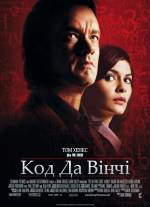
The Da Vinci Code
The Da Vinci Code
Harvard professor Robert Langdon is suspected of a heinous crime he did not commit. Langdon meets the cryptographer of the Parisian police, Sophie Nevo, and together with her tries to uncover a secret that can undermine the power of the Catholic Church. Robert and Sophie must do this before they are caught by the law enforcement officers or stopped by opponents who are ready to do anything to preserve a great religious secret ... Read more Главные херои и актеры actors who could vividly recreate the bright images that populate Dan Brown's novel. Executive producer Todd Hallowell notes: "This film is unique in that it has a truly international cast. Watching Ron assemble the right people, like a mosaic, who would be perfect for him is a fascinating process. He really managed to create an outstanding ensemble. Tom Hanks / Robert Langdon "Robert Langdon is a real hero of the intelligentsia, who leads a relentless investigation of a mysterious mystery", - shares his view on character screenwriter Goldsman. "Throughout the history of mankind, there have been tireless seekers of the truth and those obsessed with the search for the Grail. Often they were knights, people with pure thoughts, open hearts and an indomitable will." Hanks was eager to work with Howard again. His ambition was especially fueled by the opportunity to play a character so unlike himself. "Langdon has extensive knowledge that stretches far. Somehow he managed to use this knowledge to build an extremely successful career. Being a specialist in symbols, he can determine from the three signs on the cave wall what they mean and how they have been interpreted over the centuries. This guy is constantly watching everything. He sees a connection everywhere, all the signs and symbols speak to him," Hanks admires. The actor admits that working with Howard was very important in creating the image of Robert Langdon: "Ron is very nice and easy to get along with. But at the same time, he is incredibly responsible, creative and strives for perfection in everything." Audrey Totu/Sophie Neveu The name Sophie comes from the Greek word "Sophia" - "Wisdom", and the surname Neveu means "descendant" in French - a descendant of Mary Magdalene, maybe? For Ron Howard, the choice of a performer for the role of Sophia Neveu was extremely important for the proper transmission of his vision of the narration of "The Da Vinci Code". "I immediately considered the idea of a sacred woman to be one of the central themes of the book and the film I was going to make," Howard says. "I myself have three daughters and, in addition, I have been married to a strong woman for 30 years, so this seemed important to me. The adventures full of emotional experiences of Sofia are truly exciting. We are lucky to have such a strong female character in the story, because her understanding of who she really is and the discovery of the mysterious details of her life add an element of thriller to the script." Screenwriter Goldsman was also intrigued by the concept of a sacred woman. "For me, the most interesting aspect of The Da Vinci Code was the story of this girl who, in search of information about herself, finds out that she is a much more significant person than she imagined. From a writer's point of view, I can see that this is very fertile ground. She is, of course, not so spectacular and heroic, but for me it is the most touching and human part of the story." Casting actresses for this exalted role undoubtedly promised to be difficult for the filmmakers. Several outstanding French actresses auditioned, and the winners were invited to a joint reading with Tom Hanks in Los Angeles. Audrey Totu, who had only one English-language film under her belt, Dirty Pretty Things, was the least prepared, judging by the number of scenes learned, but nevertheless managed to make an indelible impression on the selection committee, not least thanks to the nuances she brought to her performance. "Vinci" makes her an ideal candidate," Howard shares his observations. "She is mysterious and simple at the same time." Tom Hanks summarizes: "Audrey is fascinating and mysterious. On the one hand, she is a little distant, and on the other hand, when she asks questions, you are simply amazed at how deep they are, and how they help to look at the current state of affairs in a new way." Ian McKellen/Sir Lew Teabing "Tebing is a true mystery of this story, like a sphinx," notes Goldsman, "he is full of secrets and is a driving element of events both in the book and in the film. Most of what happens turns out to be either planned by him a long time ago or presciently foreseen." "There are many great actors in England who would undoubtedly be worthy to play Sir Lew Tybing," says Howard, "but I met Sir Ian and immediately realized that we would work well together, and his character would be simply remarkable. As it turned out, I was right. I admired his performance in so many different films. His talent was evident both in well-known characters and in small roles in low-budget films." Hanks also highly appreciated the opportunity to work together with such an experienced and respected actor: "I'm not sure that anyone else gets as much pleasure from acting as Sir Ian McKellen," he says. "On the first days of meetings and auditions, this became especially noticeable. Rehearsals were full of constant inexhaustible enthusiasm. He not only voiced the text perfectly, but was also amazingly good at the expressive component. Whether he was sitting at the table, discussing the history of the Priory of Sion, or going down the stairs with the words "And who gave this to us?" - each time it turned out differently for him. Even then, I thought that this man could replace the entire theater troupe. Paul Bettany/Silas Having taken on the role of Silas, perhaps the strangest character in Dan Brown's novel, actor Paul Bettany set himself the goal of "animating" the gloomy monk. "Silas is an incredibly lonely hero who is looking for a person who can become his spiritual father, patron. The first person who showed sympathy for him was Aringarosa. It's really unfortunate that he's starting to use Silas' shaky psyche for his own purposes. Silas' father called him a ghost, a ghost, and Silas ended up in prison, killing him for it. Then he meets Aringaros, who gives his life meaning," says the actor about his character. The actor was selected for the role of Silas last. After all, despite the fact that Howard listened to a huge number of applicants, it seemed to him all the time that they were far from understanding the image of the character. He had already worked with Bettana on the Oscar-winning film "A Beautiful Mind", and was also admired by his performance in "Gangster No. 1" (Gangster No. 1), where, according to Howard, he managed to demonstrate the special aspects of his talent. "Paul liked the character, liked the script, so he was ready to do anything to play him," says Howard. "He's amazing in this movie, just amazing. He's amazing in this role." Jean Reno/Bezu Fache Bezu is the name of the locality where the Templar fortress was located in southern France, and Fache means "cross" in French. Jean Reno had already worked with producer John Cayley and was interested in the role of Bezu Fash, as he admired the idea of playing a policeman whose faith in Aringarosa was betrayed. "He (Fache) got involved in all this because he sincerely believed in something," Renault explains. "But, first of all, he is a policeman and tries to do his job conscientiously. I was interested to see how my character would react to this betrayal of the archbishop." Howard remarked more than once that he did not consider anyone for the role of captain of the French police, except Renault. "Jean is one of those people who bring real fun to the filming process, not to mention excellent taste, intelligence and talent." In general, Reno looks very organic in the role of Bezu Fash, she fits him like an impeccably tailored suit. "I was very flattered when I found out that, it turns out, Dan Brown wrote this image with me in his head. It certainly gave my shooting in this film a special meaning for me." Alfred Molina/Bishop Aringarosa The name of the bishop is one of the most intriguing in Brown's novel. "Herring" means herring, and "Rosa" means red, smoked. Does this mean that the bishop is smoked herring? Alfred Molina was approved for the role when he starred in the film "How do you like it?" (As You Like It), along with Howard's daughter Bryce Dallas Howard. He immediately rushed to London from the second location in England, where the shooting was going on at that moment, to familiarize himself with the script and take part in rehearsals. Molina says that the time spent with Howard and Goldsman during the pre-production period turned out to be very important. "Ron, Akiva and I sat in a room and began to look at all the scenes. It was then that we managed to find the keys to my image, and as a result it turned out to be exceptionally bright," he reveals. Howerd was extremely flattered by the attention Molina paid to his role when he tried to explore the deep traits of his character. "Alfred managed to understand the hero and the environment that gave birth to him, much better than all of us, and even the author of the novel. This little bit of plausibility greatly contributed to the expressiveness of the image on the screen." The Origins of Leonardo Da Vinci's Work: Art and The Da Vinci Code The Last Supper. In "The Da Vinci Code", the hero Sir Lew Tübing offers an interesting interpretation of this legendary work, which Leonardo Da Vinci began in 1495 and completed in 1498. Commissioned by his patron, the Duke of Milan, Ludovico Sforzai, "The Last Supper" is a fresco painted on the wall opposite the refectory in the monastery of Santa Maria delle Grazia in Milan. The picture, which measures 4.57 by 8.84 m, depicts the moment immediately after Jesus revealed to the apostles that one of them would betray him. Their natural reaction is masterfully conveyed by the artist, demonstrating the breadth of emotions: from shock and unpleasant astonishment to the restrained mask of calmness on Judas' face. This was an unprecedented step in the writing of that time. The painting is clearly an anachronism, as the type of table, tablecloth, chairs, and dishes clearly belong to the 15th century and were used by the artist's contemporaries, monks. Leonardo arranged the apostles in three groups, with Christ in the middle, at some distance from all the others. A perspective from one point creates a certain triangle consisting of two triangles on each side. On the right hand of Jesus is the feminine figure of the young apostle, the central hook for the shocking conclusions in The Da Vinci Code. Unfortunately, Leonardo decided not to use the generally accepted method of painting frescoes, which involved using egg tempera over raw plaster. On the contrary, he drew directly on the dry wall. In 1556, the art historian Vasara wrote that the painting was so destroyed that only barely noticeable rough outlines of the figures remained. "Mona Lisa". "Mona Lisa" is one of the most famous and recognizable portraits in history. Leonardo began to paint this mysterious woman with a bewitchingly friendly smile in 1503 and may have continued to work on her for several more years. Three years before his death, Leonardo went to work in France at the invitation of the young King Francis I and took the painting with him. First, the picture was exhibited in Fontainebleau, then in Versailles, and finally in the Louvre, where this unknown lady still smiles through the protective glass of the winding queue of those who want to look at her. "Mona Lisa" is perhaps the most popular exhibit in the museum. For many years the picture remained known as "Gioconda", as it was believed to be a portrait of Elizabeth, the third wife of the Florentine merchant Francesco Di Gioconda. But the canvas still remains the subject of heated disputes. Some believe that Leonardo depicted himself in the portrait, others that this is his lover from the noble Medici family. Actor Jean Reno was in love with this masterpiece all his life. "I came to see her many times," he says. "For me, she is like an enveloping aroma of spirits: when you move away from her and turn around, she still follows you with her gaze. It is this contact between the painting and the viewer that I call the "enveloping aroma of spirits", such a kind of intoxication. It seems to some that the main mystery of this work by Da Vinci is hidden in her smile, but for me it is in her gaze. Howard adds: "In Mona Lisa there is something mesmerizing, attractive, something that makes you constantly think about her. Therefore, I am glad that the painting was chosen as the symbol of the film." "Madonna in the Rocks" In 1483, Leonardo was hired to paint the altar. There are two versions of the "Madonna in the Rocks": the original canvas hangs in the Louvre, and the later list is in the collection of the National Gallery in London. The painting depicts the Virgin Mary, sitting with the baby Jesus and little John the Baptist, in the company of the archangel Uriel. This painting, which she also called the "Madonna in the Rocks", used in the "Da Vinci Code". crowned in 1100, and the Templars, led by Hugo De Payen, occupied one of the wings of his palace, built on the site of the great Temple of Solomon, and now stands the Al-Aqsa Mosque. It is because of this that they were called "templars" - "templars". The knights were a military monastic order created to protect Christian pilgrims As monks-knights, they took a vow of poverty and celibacy. Their emblem was a red cross on a white field, and their assistants (who were of ignoble origin) wore red ones on top of a black field. The order was blessed by Bernard, the powerful abbot of Clairvaux (the founder of the Cistercian order, and later canonized by the Church). Council in Troyes in 1128. Probably, it was Bernard who wrote the "Statutes" of the Order, according to which they were accountable only to the Pope. These famous knights soon expanded the scope of their duties: in addition to the protection of pilgrims, they began to participate in all the battles that took place in the Kingdom of Jerusalem. They went from protecting the property of traveling pilgrims to inventing the banking system: they lent them money for their future pilgrimage against the collateral of their property. They also collected taxes and church tithes. Soon they owned extensive land plots and huge wealth, which caused the envy of monarchs and other political leaders who could not bring them into submission. The possessions of the Templars spread throughout Europe and included castles in the Holy Land and Cyprus, and their knowledge and influence in the East inevitably involved them in the political life of that time. They were the predecessors of modern professional armies; dedicated, well-trained and disciplined warriors who eschewed personal heroism for the sake of team success. The main rivals of the Templars were the Hospitallers, an Order founded in 1070 to help pilgrims and provide housing and treatment to the poorest of them. They also quickly evolved into a powerful and wealthy military monastic order. The refusal of these two influential orders to cooperate with each other, as well as their mutual distrust, caused a lot of trouble for the rulers of European states. However, the Hospitallers were in a better position, since they did not stop their charity, which helped to transfer the anger of the powerful of this world to the Templars. On Friday, October 13, 1307 (this is probably where the superstition that Friday the 13th is an unlucky day came from), King Philip IV of France issued a decree to arrest the Templars and confiscate their property. Arrested Templars were questioned and forced to confess to a huge number of heresies and perversions. Despite attempts to save the Order - at several trials its members were found innocent - the forces devoted to its destruction turned out to be stronger, and Jacques De Molay, the last Grand Master, climbed the pyre in 1314. The two-hundred-year history of the Knights Templar ended there. Priory of Sion. In his novel "The Da Vinci Code", the author Dan Brown states that the Priory of Sion is a real organization founded in 1099, and a parchment found in the National Library of Paris testifies that its members were many outstanding figures of literature, art and science. However, these documents from the National Library were recognized as a forgery placed there by Pierre Plantard. He admitted that he "founded" the Priory together with three friends in 1956, either for fun or for vanity. He was elected Grand Master of the Priory in 1981. These dubious documents and manuscripts, which became known as the "Secret Dossier", claim that this mysterious society was founded in 1099 by Godfrey de Bouillon, who led the Crusader armies and became the first ruler of the conquered Holy Land. The Priory is also credited with the creation of the Templar Order, which broke away from it a hundred years later. The shooting team of "The Da Vinci Code" traveled a lot to the locations of "The Da Vinci Code" events: Paris, Great Britain, Malta, stopping for filming in the most stunning and historically significant places in Europe. And although a large number of scenes were filmed in the pavilions of the Shepperton and Pinewood studios, the vast majority of key scenes were filmed directly at the locations of the book. Says Tom Hanks: "We visited many places mentioned in the book. We squeezed through narrow doors and crawled on our knees in many historically significant places. Without a doubt, this helped me as an actor to better convey the image of Robert Langdon. This experience, of course, is not at all like a daily arrival at a Hollywood studio for filming in Pavilion #6." France The opening scenes of "The Da Vinci Code" were filmed on the streets of Paris, where the tiny Smart car drives around the legendary Louvre Museum, and in the Chateau de Ville near Versailles. Built at the end of the 12th century as a fortress to protect the right bank, the Louvre played an important role in the history of Paris. It was first converted into a Gothic royal residence in the 14th century by Charles V, and then rebuilt in the Renaissance style in the 16th century by King Francis I, the last patron of Leonardo Da Vinci. The Grande Galerie opened as a museum in 1793. About 200 years later, after further changes and reconstructions, the American architect of Chinese origin I.M. Pei built new underground rooms, as well as a controversial glass pyramid, which now serves as the entrance to the museum, and also carries a large semantic load in the film. The film crew was lucky enough to get access to the Grande Galerie after the end of the reception. "We very much appreciate the privilege given to us. It helped to give the film credibility," says Hanks. Adds his partner Audra Totu: "It's so great that we were allowed to shoot in the Louvre at night, they provided us with all these paintings, statues... It inspired us all very much." The character Sir Lew Teabing (Ian McKellen) lives in Chateau de Ville, which is located northwest of Paris, not far from Versailles. Langdon and Sophia arrive there late at night in an armored truck to get advice about the Holy Grail. This estate was completed in 1696 for François Mansard, Count of Ofle (he was ambassador to Venice under Louis XIV). It is a plot of 185 acres, including two rectangular ponds, cascades of fountains and beautiful gardens designed by André Le Nôtre (he is also the author of the gardens of Versailles). Filming took three nights on the grounds of the Chateau, although most of the interiors (except the foyer) were shot in the pavilions of Shepperton Studios. United Kingdom Traveling to London in search of additional keys to solving the cryptex cipher, Langdon, Neveu and Teabing head to the Temple Church, which is located between Fleet Street and the Thames. The church, consecrated in 1185, was one of the elements of the temple built in the 12th century as the headquarters of the Templars in England. The church is divided into two parts: the round and rectangular chancel, completed in 1240. Kruglaya was built in the image and likeness of the Church of the Holy Sepulcher in Jerusalem. Nine life-size statues of knights lie on its floor. After the Order was banned and destroyed in 1307, rival Hospitallers seized it and held it until Henry VIII overthrew them. The monarchs leased parts of the temple to law universities, which together received the name Придворные Гостиницы. They still use them and the adjacent territories. The church was bombed in 1941 during the Second World War, and was restored with difficulty. Soon after inspecting the Temple Church, Langdon realizes that they have come to the wrong place, and after some thought, he leaves Sofia for Westminster Abbey. Although the action that took place outside the abbey was filmed near it, the interiors, in turn, were filmed at Lincoln Cathedral, three hours' drive north of London. Lincoln Cathedral, consecrated in 1092, was built by Bishop Remigius by order of William the Conqueror. It is everyone's favorite example of early English Gothic architecture. Over the course of a century, it has survived earthquakes, fires, and falling vaults. Its central tower rises to 82.60 meters and is the highest cathedral without a vault in Europe. And when the dome was present (before it collapsed in 1594), it made the cathedral the tallest structure in the world. Lincoln Cathedral played an outstanding role in the history of Europe. The Bishop of Lincoln was one of those who signed the Great Charter of Liberties, the original of which is still kept in the castle next to the Cathedral. Logistical difficulties when filming outside Westminster Abbey, a popular tourist destination, were accompanied by incredible difficulties. However, the shooting of the film did not anger the tourists, on the contrary, it delighted everyone, which made it possible to shoot a lot of additional material, which will be included as a bonus in the DVD version of the film. Howard recounts: "The scene we filmed was the most intense in the film, the decisive point of the narrative, and it is difficult for me to forget how crowds of onlookers tried their best to get into the camera lens, because we could not only drive them away from the filming location, but even push them out of the frame. Therefore, we had to come up with something, because otherwise everything could collapse. But we asked for their cooperation and they agreed. Shel was not strong, It was barely raining, but as the script was supposed to be dry, we asked everyone to take off their umbrellas and obey! Langdon and Neveux end their investigation at Rosslyn Church in Scotland, six miles south of Edinburgh. This is the town of Rosslyn, which served as a place of residence for Masons. The church was founded in 1446 by Sir William St. Clair, Prince of Orkney, who apparently wanted to build a much larger cross-shaped church on this site. But the works stopped with his death in 1484. This Gothic church, measuring only 21.03 meters by 10.67 meters, contains a mysterious stone carving that captures the imagination and causes the most diverse interpretations. What did she not call her images: from traditionally Christian to Viking and Celtic myths, as well as the posthumous mask of King Robert the Bruce. Dragons, demons and 100 Green People are present on it. No wonder the church has fascinated so many writers - Sir Walter Scott and William Wordsworth among them. Legends surround the church, and according to one, William St. Clair was the Grand Master of the Templars. If you believe the second, the carving depicts the beginnings of corn (a culture unknown in Europe before the discovery of the New World), and this suggests that the grandfather of William St. Clair probably reached Newfoundland in 1398 and advanced south to Massachusetts itself. The rural landscapes of Lincolnshire were used as a location shooting "in Italy", and the local Burghley House replaced Gandolfo's castle, where Bishop Aringarosa goes to meet with the financiers of the Vatican. Burghley House was designed and built by William Cecil, Chief Treasurer of Queen Elizabeth I, between 1555 and 1587, and is considered one of the finest examples of Elizabethan architecture. It has more than 100 rooms; and among others, the Paradise Room and Hell's Staircase, decorated by Antonio Verrio, were used in the filming. Malta The last stop of the film crew was the island of Malta, where many "voices from the past" scenes were shot, including scenes of events taking place in the Holy Land and Spain. Located in the heart of the Mediterranean, Malta has always been a crossroads of ancient and modern trade routes, which is reflected in its diverse architecture. In particular, one of the filming locations was Fort Vittoriosa, which was the home of the Knights of St. John (Hospitaliers) after their expulsion from Rhodes. For 250 years, the knights ruled the island and protected Christianity from the Ottoman Empire. In the end, Napoleon captured their island.
Open trailer
Director board
Browse production feed

Production feed
Browse production feed










Genres
-
 Drama (3795)
-
 Comedy (2460)
-
 Thriller (1618)
-
 Action (1236)
-
 Series (1088)
-
 Adventure (1019)
-
 Horror (818)
-
-
 Sci-Fi (808)
-
 Family (667)
-
 Animation (613)
-
 Mystery (536)
-
 Fantasy (532)
-
 Melodrama (520)
-
 Documentary (443)
-
-
 Biopic (355)
-
 Historical (219)
-
 Music (184)
-
 War (144)
-
 Short (112)
-
 Musical (106)
-
 Festival (97)
-
-
 Biography (85)
-
 History (72)
-
 Western (70)
-
 Mystic (46)
-
 Erotic (44)
-
 Stage Play (35)
-
 Military (33)
-
-
 Noir (16)
-
 Concert (15)
-
 Kids (12)
-
 Comic Book (11)
Release years
-
 2026 (375)
-
 2025 (330)
-
 2024 (355)
-
 2023 (428)
-
 2022 (484)
-
 2021 (487)
-
 2020 (582)
-
-
 2018 (761)
-
 2017 (789)
-
 2016 (717)
-
 2015 (524)
-
 2014 (415)
-
 2013 (189)
-
 2012 (77)
-
-
 2010 (63)
-
 2009 (75)
-
 2008 (68)
-
 2007 (64)
-
 2006 (47)
-
 2005 (57)
-
 2004 (48)
-
-
 2002 (42)
-
 2001 (43)
-
 2000 (44)
-
 1999 (34)
-
 1998 (22)
-
 1997 (26)
-
 1996 (20)
-
-
 1994 (20)
-
 1993 (15)
-
 1992 (17)
-
 1991 (15)
-
 1990 (21)
-
 1989 (14)
-
 1988 (20)
-
-
 1985 (14)
-
 1982 (12)
-
 1979 (11)
-
 1966 (10)
-
 1957 (11)